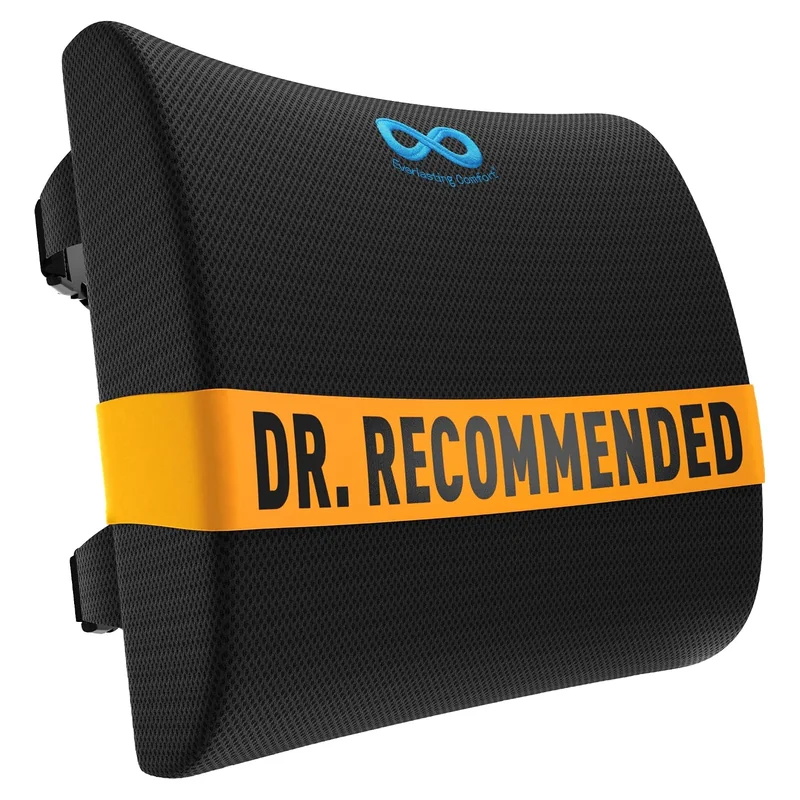
1. The Ergonomic Chair Trap: Why Fancy Mesh Doesn't Guarantee Support
Most remote employees assume that buying an expensive gaming or task chair will immediately eliminate lower back fatigue. However, spinal biomechanics dictate that no universal chair curve matches every individual's torso length.
Without firm contact at the L1-L5 lumbar vertebrae, the pelvis tilts backward, leading to progressive slouching, neck strain, and hamstring tightness.
Position the thickest contour of your lumbar pillow right at your beltline, ensuring your knees remain at a 90-degree angle to the floor.
2. Heat-Responsive Pure Memory Foam vs Cheap Foam Fillers
Physical therapists on community forums heavily stress the difference between open-cell viscoelastic memory foam and generic polyurethane padding. Pure memory foam uses your body heat to soften precisely where your spine exerts pressure while maintaining rigid density along the lateral wings.
This dynamic contouring distributes body weight evenly, reducing pressure hotspots along the sciatic nerve by up to 60% during 8-hour coding or writing shifts.